A tricky block in a flame zone called for some creative design ideas. The result is a unique home incorporating Passivhaus features and art gallery-style architecture.
By Lynda Brighton
Photos by Grace Picot

Damir Jurkovic is a builder and a Passivhaus enthusiast, encouraging owners to consider the benefits when designing their homes. Having visited one of the homes built by Damir and Split Building, I was intrigued to find out what his own home with Emma Joseph is like, and which of the features he recommends to clients have been incorporated into his build.
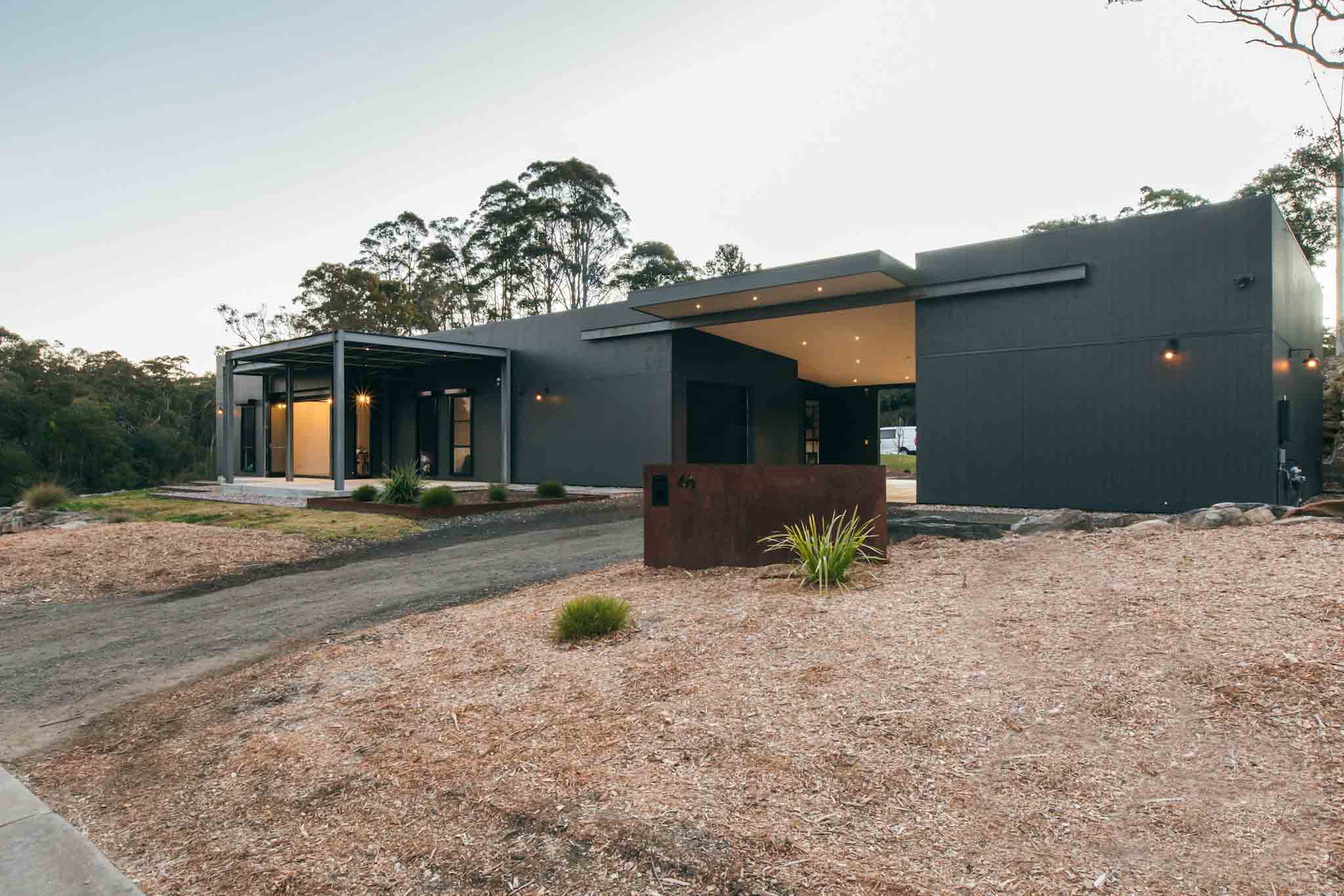
Damir says, ‘Our brief was to have a home with a drive-through carport, workshop and garage all under the one roof. Unconventionally, Emma and I wanted it to be black in colour, industrial/minimalist and art gallery-like in design, with high ceilings and for the entry door to be concealed from the street. For future use, it needed to incorporate adaptable principles and wifi intelligent controls. The land is classified as Environmental Conservation (E2), which defined the required setbacks of the dwelling from powerlines, sewer mound and street front. Most importantly, the home was to be built to stringent flame zone specifications, requiring it to withstand the harshest bushfire conditions of being engulfed by fire. The block is classified as FRL (Fire Resistance Level) BAL-FZ (Bushfire Attack Level Flame Zone).’
Adaptable layout
This is a large home, to cater for two adults along with space-hungry teenagers and a fast growing youngster, as well as an office and workshop for Damir’s building business. The main home includes an office, master bedroom with ensuite, family bathroom, laundry, three bedrooms, open plan kitchen and living area, plus a garage. Outdoors there is an external kitchen with undercover seating. A 4-car carport and workshop (with plans to convert to a granny flat in future) complete the package.
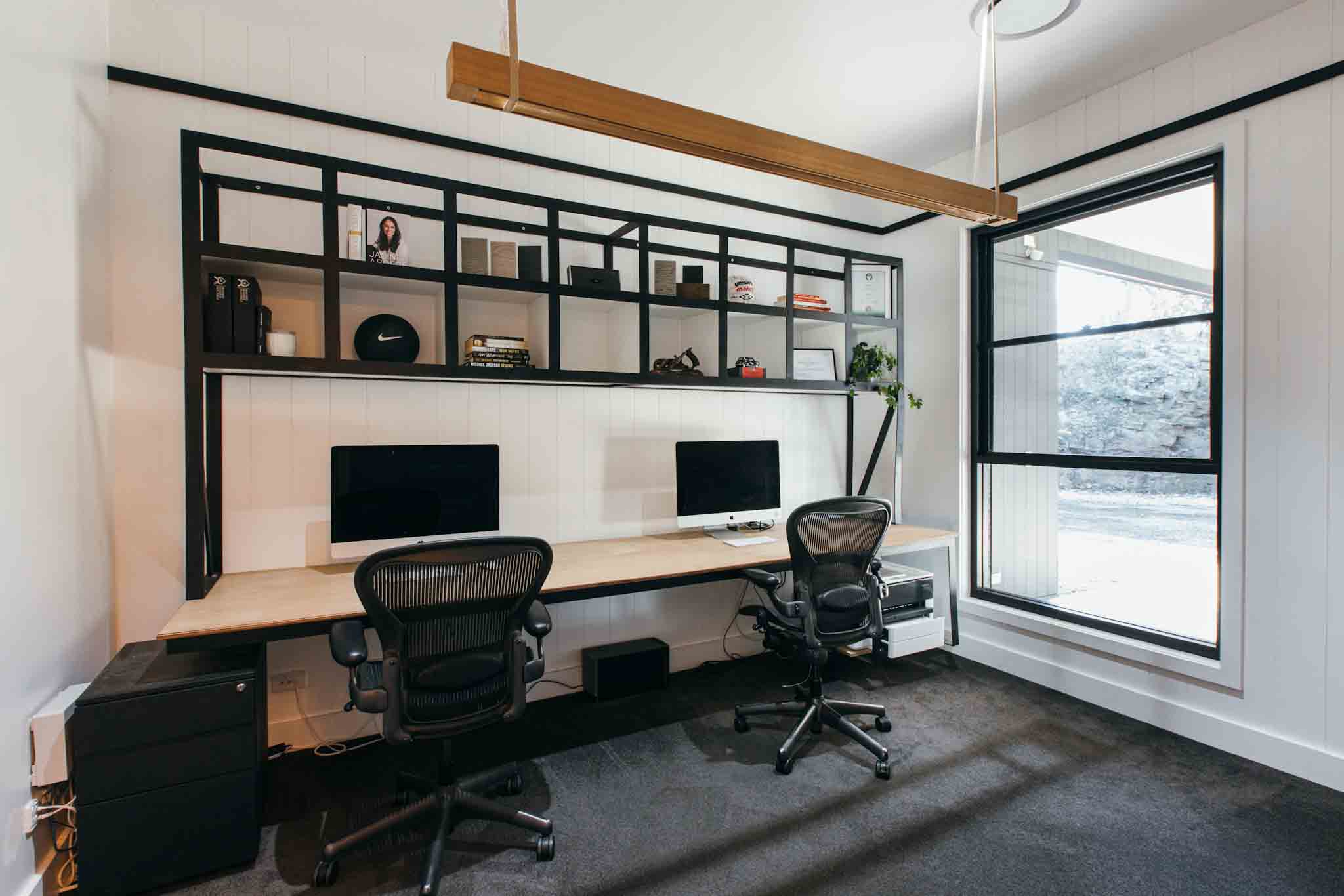
As Damir works from home, his office and the mudroom are adjacent to the front door. The area can be separated from the main house by closing a self-built cavity door, which is a made with a Corten-look product by Laminex. This offers privacy for when clients visit the office. The mudroom includes loads of storage for shoes, coats, sport equipment… all the paraphernalia of a family household! As per the original brief, the front door does not face the street and is partly concealed. This makes for fun and games with deliveries! The bonus is that there is no direct view into the house from the street, especially bearing in mind that the front door is glass.
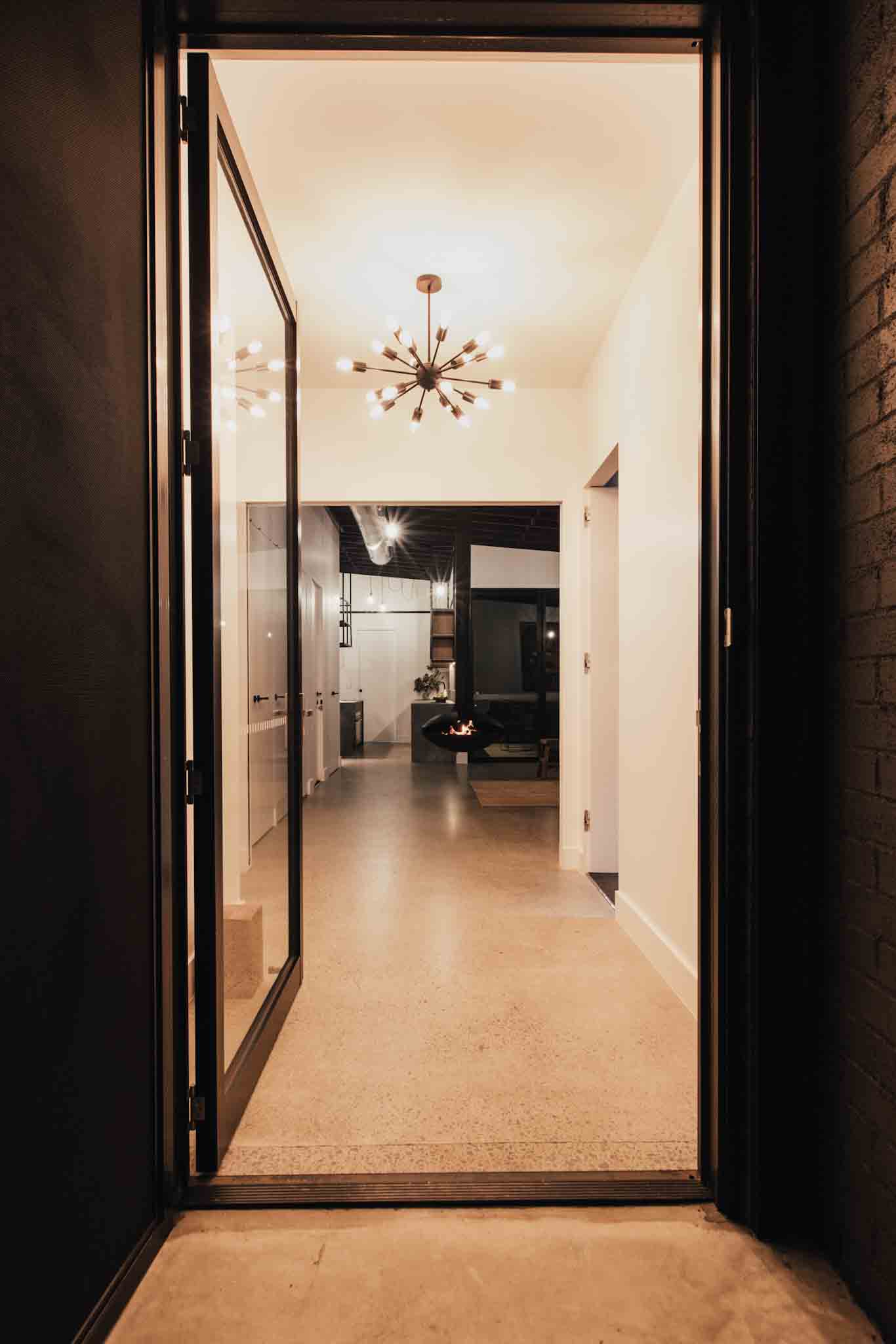
Adaptable design aspects include no steps or hobs, wide doors, roller bolts to doors for ease of use, electric bin drawer and open ensuite design. These all allow the home to be wheelchair-friendly.
Minimalist look
The structures perimeter walls have been clad externally and internally with magnesium oxide board, which is free of harmful materials, does not off gas, and has excellent fire resistance, sound absorbing and thermal efficiency properties. This was to meet the strict FRL requirements.
As the boards are a low conductor of heat, and orientation along with eaves minimises the amount of direct sun on them, it was possible to select black as the external cladding colour without impacting on the thermal efficiency. Internally, the black line around the wall is a ‘feature’ that was included to help hide the join between sheets, as the ceiling is higher the the length of a single sheet. It also doubles as a picture rail.
The look is minimalist with clean lines. There are no cornices – all square set – and no door architraves. This was particularly important on the living area wall, with all the doors leading to the other rooms. If each of the doors had architraves, it would have become quite messy. The use of adjustable concealed hinges – difficult to install and $90 each – was well worth the effort, as they completed the flush look.
Energy efficiency came from careful selection of materials and by incorporating passive design principles, especially with regard to the window orientation, size and grade. Site restrictions resulted in the house being placed along the north-south axis, with a narrow north face housing the garages and workshop. This meant the house design needed to include large windows and glazed doors to maximise solar gain.


The ceilings are 3m and higher in places, creating volume to moderate extreme temperature changes.
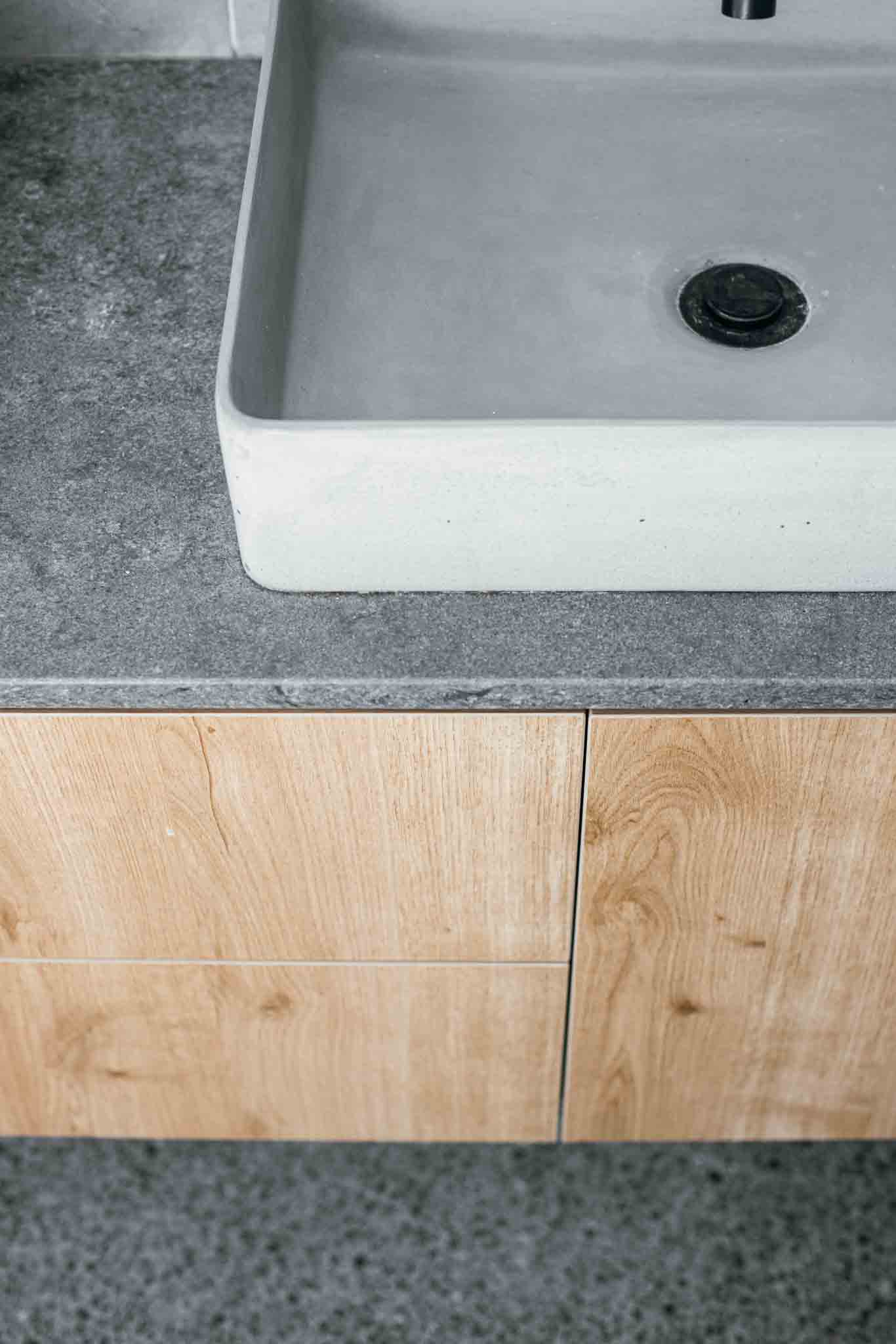
Polished concrete features throughout, even in the wet areas. It has been an absolute winner, especially when it comes to cleaning. Damir says it can be a little cold underfoot in winter – hydronic underslab heating would have been ideal – but Ugg boots work just as well! The bedrooms are carpeted.
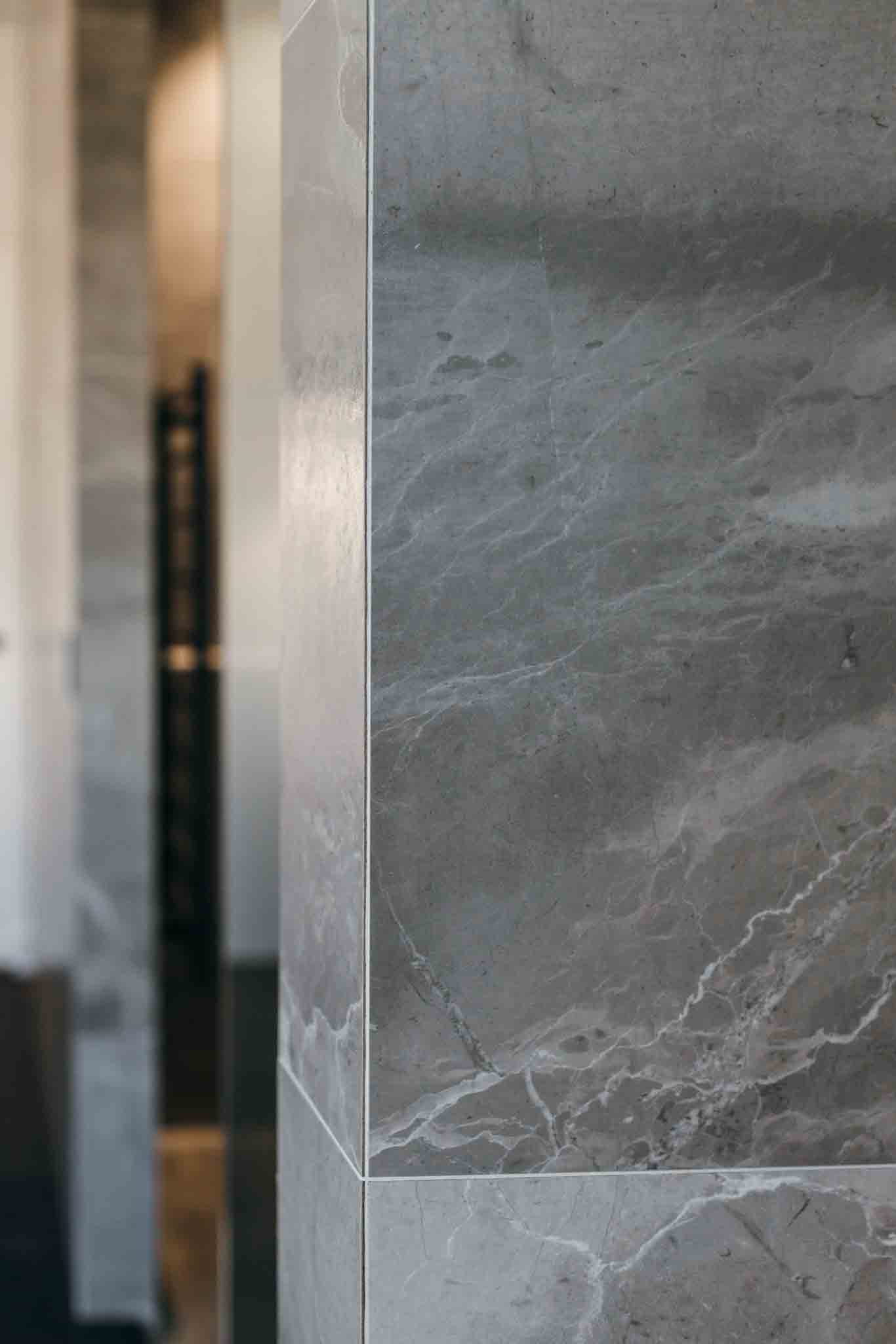
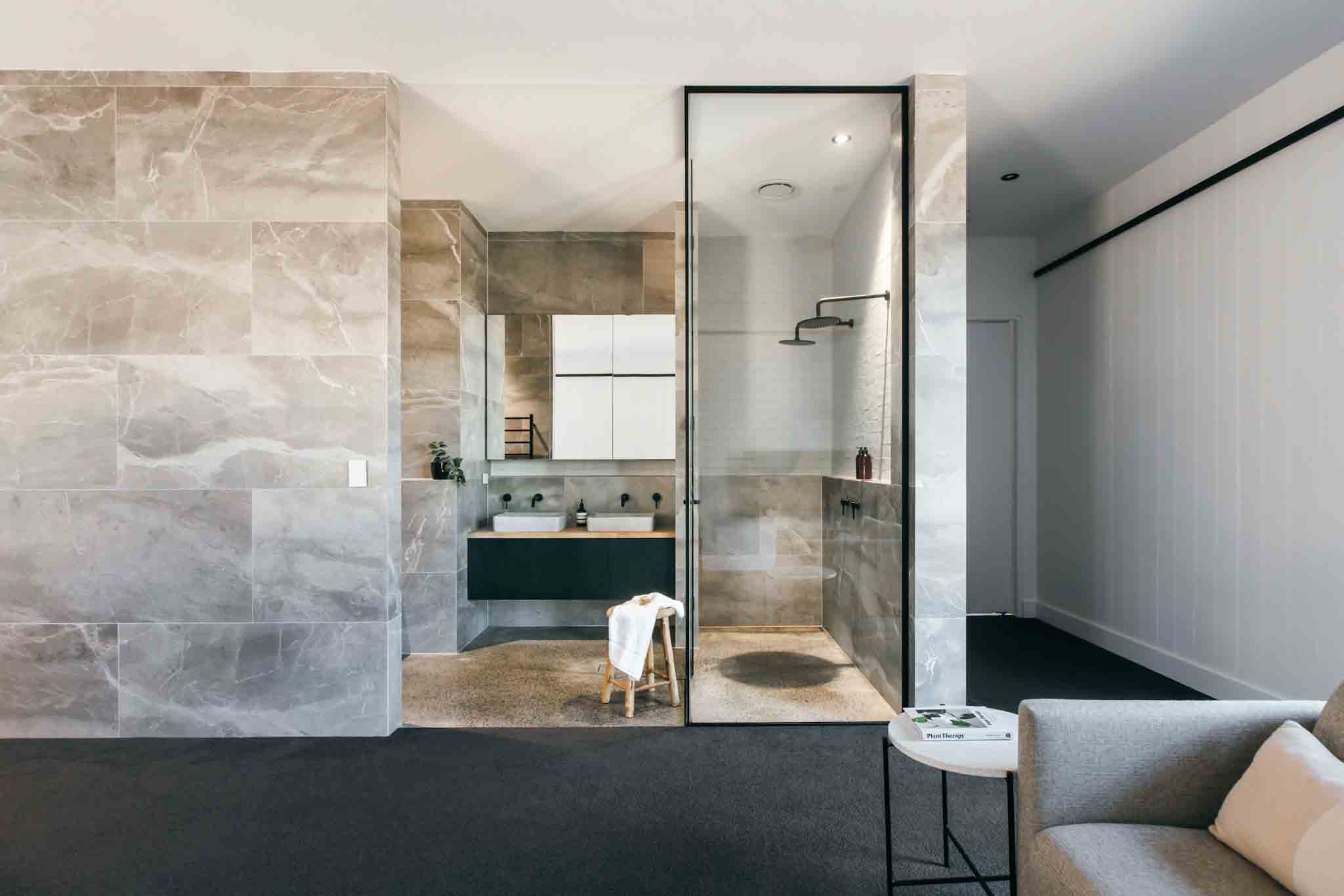
The open plan ensuite to the main bedroom is completely tiled with marble-look large format tiles, including the outside of the wall with the bedroom. The initial all-white idea seemed too stark; the darker, more natural tiling has completely changed the look and feel of the room – it almost feels like being outdoors.

Industrial feel
Built on an old sandstone quarry, the site itself is ‘recycled’. Damir was keen to include as much recycled, or repurposed, material as he could in the build. The office desk and shelving were made from the offcuts of metal that remained after the build. The overhead light fitting used a post removed from another site that Damir held onto.
All the timber is FSC sustainably harvested timber. The ceiling structure is exposed in the open plan living area. Damir used the old-style herringbone blocking technique, as he likes the old buildings in the area and the way that carpenters used to build. This is a bit of an ode to them.
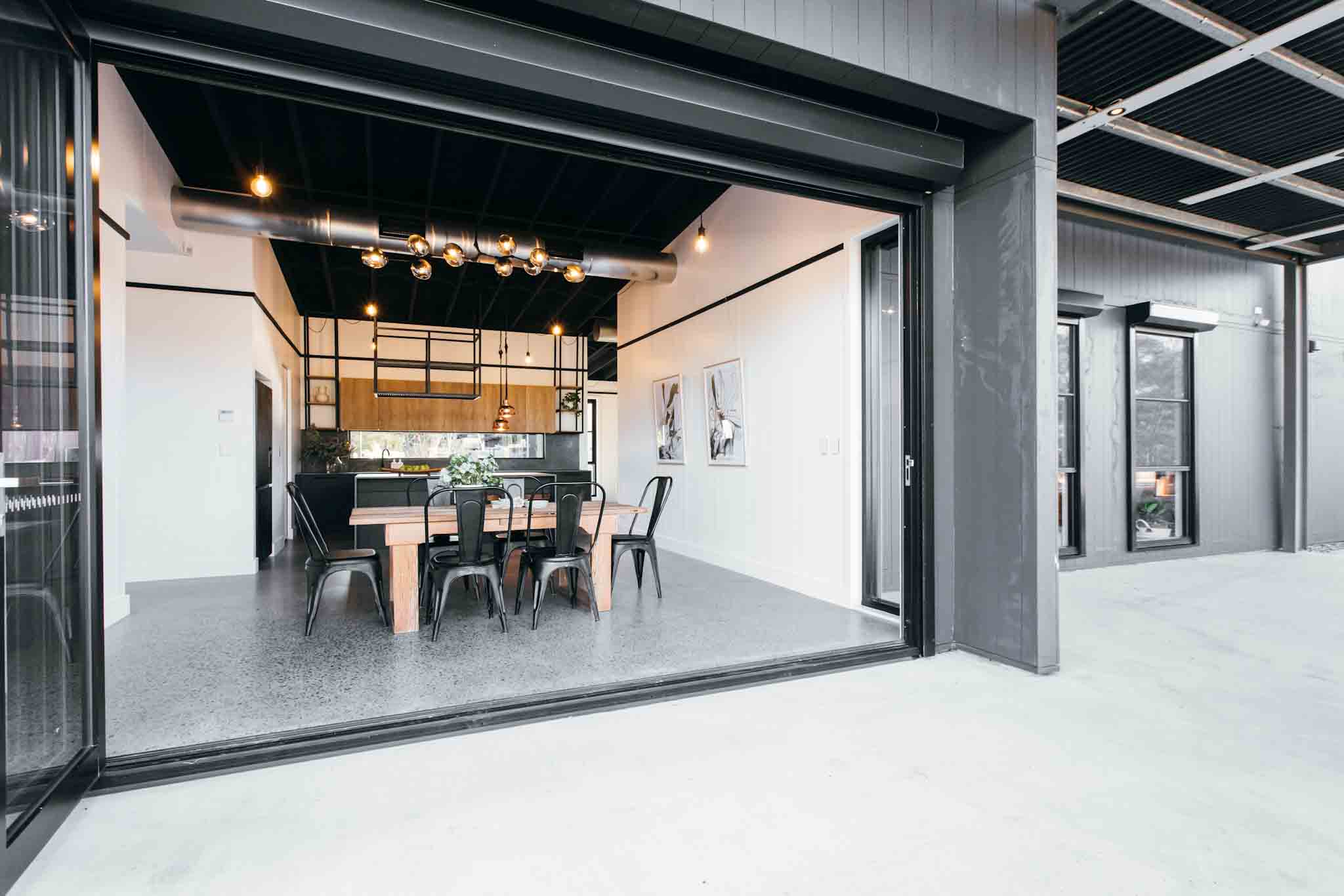
The kitchen features more metal and mesh, for shelving and the overhead gantry, which Damir built himself. The open pantry has shelves of recycled western red cedar, painted white to keep the area fresh and light, with everything visible. Kitchen cabinetry is of PVC laminate ‘Nuded Oak’ for durability.
The Bora induction cooktop has a charcoal filtered downdraft extraction system, removing the need for an overhead extractor. Electric pop up power points on the 20mm concrete-coloured Caesarstone benchtops are discreet. Commercial style copper heat lamps complete the look.


Exposed stainless steel AC ducting, LED ‘lightbulbs’ and lighting from Fat Shack Vintage add to the industrial feel. Saturn Zen light and power switches by Clipsal are sleek and understated. The suspended Aurora metal fireplace is very efficient and doubles as a stunning feature.
Solid timber internal doors throughout help to retain heat and lessen noise transfer. External doors include a press seal locking feature that ‘sucks’ the door up against the frame. Windows are aluminium framed single-glazed 6mm toughened glass.
Sound attenuation measures include acoustic fibreglass insulation in internal and external walls, external cladding, sealed window and door installation. Roof insulation is a combination of blanket insulation and ceiling batts.
Outdoor assets
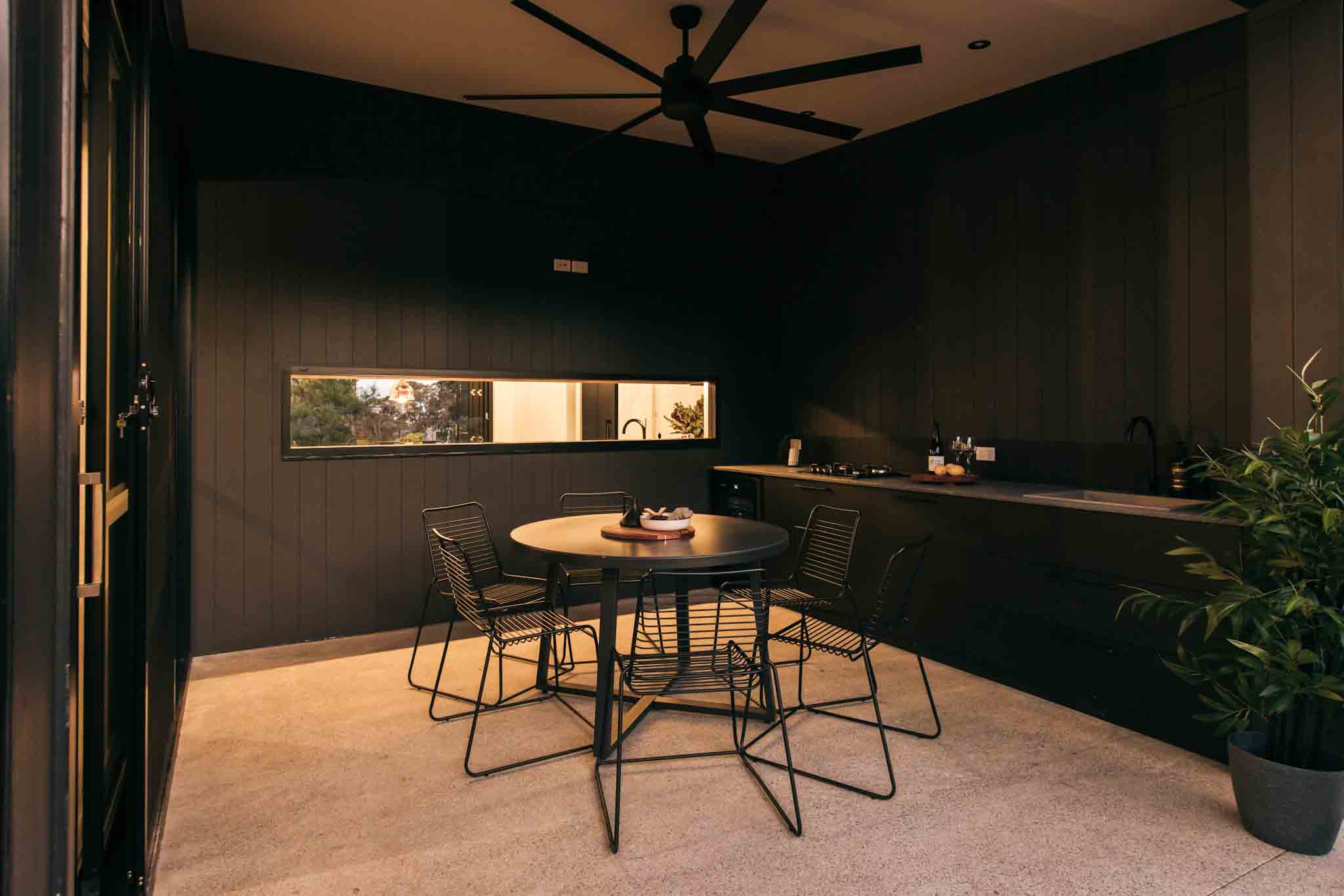
The outdoor undercover kitchen is a great asset. The big fan helps to keep the area cool – and even with keeping the flies away!
This leads onto an adjacent pergola area, currently a bare concrete slab. Damir would have loved to build a timber deck for it but the flame zone is a problem. He is considering timber-look tiling to give the area a bit of colour and to make it pop.
To the north of the house is another garage and workshop area, dedicated to Damir’s building business. It was designed with a view to converting it to a granny flat sometime in the future if needed, so is plumbed and ready for a relatively simple conversion. The covered space between house and workshop has brick walls and a concrete floor, to be hard wearing for both work activities but also to withstand the rigours of young children at play.
The letterbox is one of Damir’s favourite features – it is an old rusted metal road plate, with a cutout for the letterbox and some numbers attached. Perfect! The rusty look continues with Corten planter edging. Landscaping by Nicholas Bray includes plants with a low fuel content.
Household services
Due to work requirements, there is both single and 3-phase power. The ActronAir ESP air conditioning system with inverter technology is sturdy and very efficient.
An outdoor instantaneous gas water heating unit was installed as a temporary measure, as the preferred heat pump couldn’t be sourced in the required timeframe during the COVID supply shortages.
A 25,000-litre rainwater tank feeds the lawn using an intelligent irrigation system, as well as providing greywater to the toilets.
Sewer to the street is non-existent in the area. A dual chamber septic system feeds into a Wisconsin mound where the effluent is dispersed, travelling though a few different layers of gravel before reaching the sand medium. All the extracted nitrogen feeds the grass.
Fire resistance
Fire fighting measures include a 5hp fire pump and hose, and a 65mm Storz valve to the rainwater tank with dedicated 10,000 litres of water.
Fire resistant construction required compliant windows with electronically controlled fire shutters, compliant cladding, and magnesium oxide board under all external plasterboard ceilings. A bonus is that the fire shutters are also great for providing a double glazed effect; they help reduce internal condensation from forming in winter and also with keeping the heat in.
The garage door of insulated panels makes a big difference to the temperature in the garage, as well as providing fire protection. Brush seals along the edges of the doors prevent the ingress of timbers, as no gaps are allowed. For the same reason, the mesh in the brick weep holes is stainless steel.
The magnesium oxide external cladding product, which was chosen for meeting the FRL, hasn’t worked out quite as expected. There is blistering and cracking on the wall exposed to the sun and elements; on the walls under an eave and on the shadier side, it still looks good without blistering but has also cracked. Damir recommends having the supplier complete installation, as you are then covered in the event of product failure.
Passivhaus
While the house was not originally designed to be Passivhaus and construction had already started, once Damir understood the principles he tried to incorporate as many as he could. It was too late in the design and approval stages to go back to the drawing board. Airtightness was the one aspect they could still work on, whereas to go full Passivhaus all modelling and materials selection would have to be reworked. Three years on, and now as a certified Passivhaus builder, he knows that the house is far off the standard.
When I expressed some concerns around the need for mechanical ventilation, because I love having windows and doors open, Damir patiently explained that it was fine to live a ‘normal’ life in a Passivhaus. Mechanical ventilation comes into its own on those occasions when it is too hot or too cold to rely on natural ventilation, as it then helps to maintain a healthy and fresh indoor environment.
Damir and Emma’s home comes close to achieving the mainstays of Passivhaus – lower carbon emissions and energy use, healthier indoor environment, quiet and thermally comfortable. May they enjoy it for many years to come.
Credits
Architect: Geoff Ferris-Smith (Jakaan Architects, formerly known as DDC)
Registered Architect #8834
0420 249 720, info@jakaan.com.au
Builder: Damir Jurkovic, Split Building
Designing and building award-winning energy efficient homes in the Blue Mountains NSW. Builders License – 134977C
0466 436 464, damir@splitbuilding.com.au, http://www.splitbuilding.com.au
Photographer: Grace Picot
Based on The Central Coast of NSW, specialising in lifestyle, interior and travel photography.
0423 788 183, gracepicot@gmail.com, http://www.shotbygrace.com
Facts and figures
Materials: Classed as Fire Re BAL-FZ (Bushfire Attack Level Flame ZoneMagnesium oxide board. Brick. Colorbond roof.
Power: Grid power, single and 3-phase, to cater for business workshop. Solar is being installed.
Water: 25,000-litre watertank with 10,000-litres dedicated to firefighting. Town water.
Cooling: ActronAir ESP inverter technology air conditioning
Heating: Solid fuel fireplace.
Lighting: LED lighting, Fat Shack Vintage shades as well as some unique handmade feature fittings.
Passive energy design: Located in the Blue Mountains, which is a cool temperate zone, the main aim is to reduce the need for heating in winter. Due to site restrictions, the house is not ideally oriented, with a north-south aspect. Large windows and glazed doors maximise solar gain, while shutters provide a double-glazed effect. A polished concrete slab provides thermal mass. A solid fuel heater provides winter warmth. The Passivehaus principle of airtightness through the use of press-seal external doors and wall insulation minimises heat loss and gain.
 The Owner Builder magazine